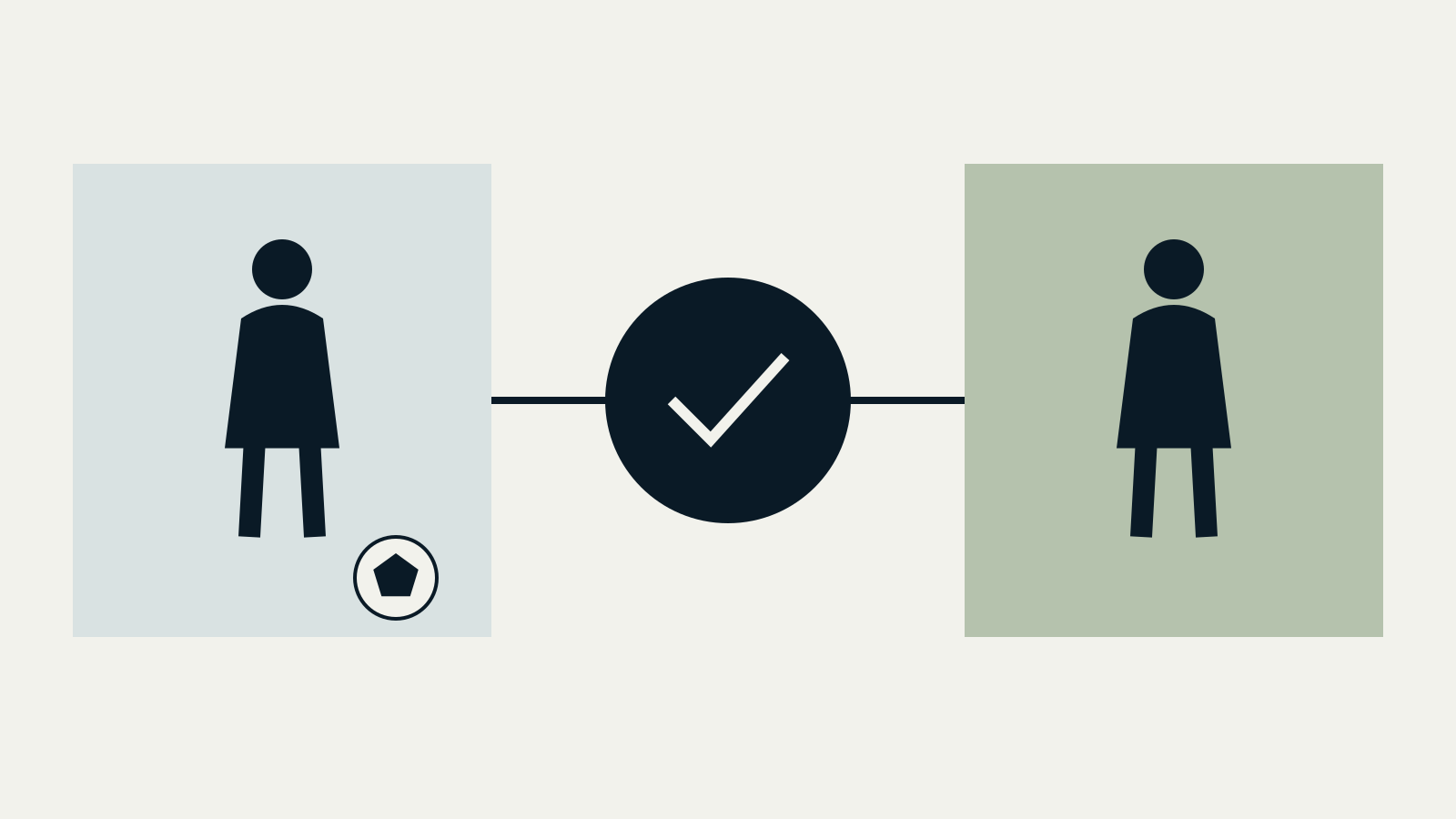
Should a brand invest in a professional athlete or sponsor a sporting tournament?
Both options can provide valuable marketing opportunities, but they differ in how audiences experience the partnership, which rights may be available and how campaigns can be activated.
The better choice depends on the brand's objectives.
Consider a hypothetical consumer technology company preparing to launch wireless earbuds in India.
The company wants to use sports marketing to introduce the product to relevant consumers.
An athlete partnership and a football tournament sponsorship could both be considered.
Here's how the decision might be approached.
Option one: An athlete partnership
A professional athlete may provide opportunities to build an ongoing product story.
For example, a footballer could feature in content connected to training, travel or everyday routines where the product fits naturally.
The campaign might include agreed social media content, brand-owned creative assets or other activities, subject to appropriate rights and approvals.
The potential advantage is continuity.
A brand can develop a recognisable association with an individual over time, provided the relationship is credible and the content resonates with the intended audience.
However, the brand must evaluate the athlete's audience, reputation, commercial fees, exclusivity requirements and available content rights.
A high-profile name is not automatically the strongest fit.

Option two: A tournament sponsorship
A sporting tournament may provide access to an event audience and opportunities for concentrated engagement.
For a consumer technology brand, this could include product demonstrations, fan experiences or promotional activities connected to the event.
These possibilities depend on the tournament's actual sponsorship rights, venue permissions and operational arrangements.
A tournament can also offer storytelling opportunities through digital content, event narratives and fan communities.
Its commercial value should therefore be evaluated beyond logo placement.
The brand needs to understand the audience, the activation environment and the resources required to execute the campaign.
Compare the opportunities against the objective
| Evaluation area | Athlete partnership | Tournament sponsorship |
|---|---|---|
| Storytelling | Can support an ongoing personal narrative | Can build around an event and its community |
| Consumer interaction | Possible through content, appearances and activations | Possible through fan experiences and event activations |
| Audience | Depends on the athlete's audience and recognition | Depends on the tournament's audience and reach |
| Timing | Can be structured across a longer period | Often concentrated around an event calendar |
| Rights | Endorsement, content and agreed appearance rights | Event, branding, activation and other contracted rights |
These are potential characteristics, not guarantees. Either type of partnership can support several objectives when the rights and campaign structure allow.
Athlete partnership
- Storytelling: ongoing personal narrative
- Consumer interaction: content, appearances and activations
- Audience: the athlete’s audience and recognition
- Timing: can extend across a longer period
- Rights: endorsement, content and agreed appearances
Tournament sponsorship
- Storytelling: an event and its community
- Consumer interaction: fan experiences and event activations
- Audience: the tournament’s audience and reach
- Timing: often follows an event calendar
- Rights: contracted event, branding and activation rights
Potential characteristics, not guarantees. The complete original comparison table appears above. Audience, rights and campaign structure determine what is possible.
Consider the complete investment
The rights fee is only part of the comparison.
An athlete campaign may require production, creative development and paid distribution.
A tournament campaign may require activation infrastructure, staffing, logistics and promotional spending.
The brand should compare the total expected investment, not just the initial sponsorship quotation.
It should also consider execution complexity and whether the organisation has the resources to make full use of the rights.
- Athlete: production and creative development
- Athlete: paid distribution
- Tournament: activation infrastructure
- Tournament: staffing and logistics
- Tournament: promotional spending
Assess the full expected investment
Conceptual cost considerations, not to scale. No amounts or relative costs are assumed. Include the resources needed to use the agreed rights.
Could the answer be both?
Potentially.
A campaign might combine athlete-created content with an event activation, creating opportunities for continuity and direct engagement.
However, combining properties adds costs and coordination requirements.
The additional investment should be justified by a clear campaign objective rather than the assumption that more sponsorship assets automatically produce better results.
Which experience best supports the launch?
- Ongoing product narrative
Explore an athlete partnership.
- Event demonstrations and interaction
Explore a tournament sponsorship.
- Continuity plus direct engagement
Consider a combination if extra cost and coordination are justified.
Validate audience fit, rights, total cost and measurable objectives before choosing.
Conceptual decision tree, not an automatic recommendation. Either format can support multiple objectives when the rights allow.
Making the decision
For a consumer technology brand prioritising an ongoing product narrative, an athlete partnership may be worth exploring.
For a brand prioritising event-based product demonstrations and direct consumer interaction, a tournament may provide a relevant opportunity.
The final decision still depends on audience fit, available rights, cost and measurable objectives.
There is no universally superior sponsorship property.
The brand's objective should determine the partnership, not the other way around.