
Access to professional athletes can create meaningful opportunities in sports business.
But access alone does not establish the value of a sponsorship partnership.
An agency may have relationships with numerous athletes, tournaments or sporting organisations. That creates potential inventory, but it does not automatically answer the most important question from a brand's perspective:
Why should we invest in this particular opportunity?
At M7, this distinction influences how we're approaching sponsorship development.
The difference between supply and demand
On one side of the sports market are athletes and rights holders seeking partners.
On the other are brands with marketing budgets, business objectives and customers they want to reach.
Connecting these two sides requires more than identifying available opportunities.
A brand might want to strengthen its position in a regional market, build awareness for a product, generate relevant content or engage consumers through a sporting event.
An athlete may be commercially suitable for one of those objectives but not the others.
The task is to identify where the brand's requirements and the property's capabilities genuinely overlap.
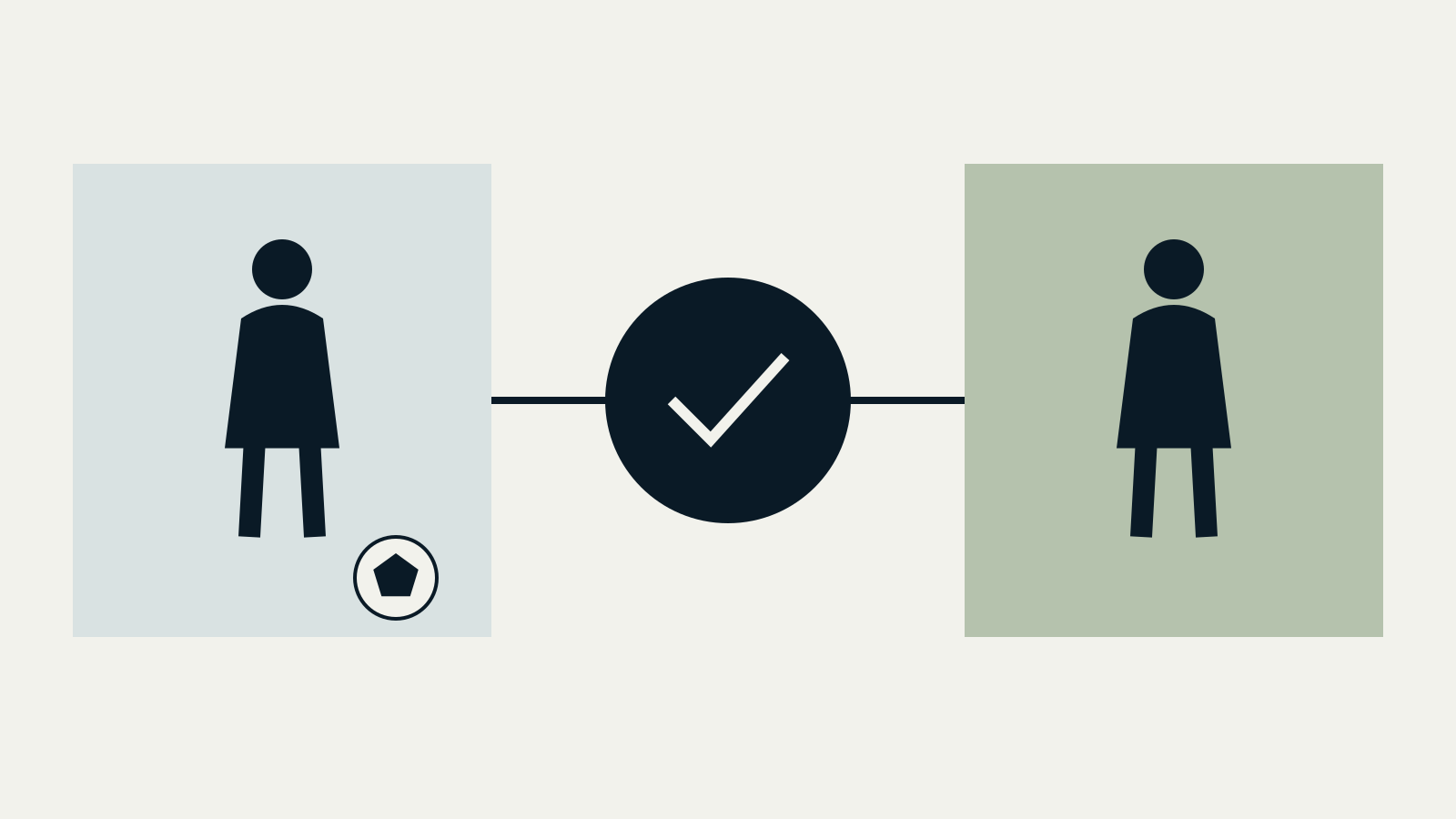
- Athletes
- Tournaments
- Rights holders
- Brands
- Business objectives
- Customers to reach
A property suited to the brand’s requirements
Conceptual market relationship. Availability alone does not establish fit.
Why catalogues have limitations
An athlete catalogue can be useful.
It may help a buyer compare profiles, sporting achievements, audience characteristics and indicative commercial requirements.
However, sending a large catalogue without context often leaves the brand responsible for developing the campaign strategy.
The buyer must identify which athlete is relevant, determine the appropriate deliverables and assess whether the potential investment is worthwhile.
That can make an otherwise interesting opportunity difficult to evaluate.
A more focused approach begins by understanding the potential sponsor before selecting the property.

A brand-first development process
For M7, the commercial logic can be organised around three stages.
1. Understand the brand
Research its products, customers, target markets, marketing priorities and recent business activity.
Identify where sports could offer a relevant marketing or commercial opportunity.
2. Identify the right property
Evaluate potential athletes, tournaments and other sports properties against the brand's needs.
Consider audience fit, credibility, geography, available rights, budget and activation potential.
The best recommendation may involve one athlete, multiple athletes or an event.
There may also be situations where no suitable opportunity exists.
3. Build the partnership proposition
Translate the opportunity into a campaign concept or partnership structure.
Clarify the rights, deliverables, responsibilities, activation requirements and intended outcomes.
The proposal should make it easier for the brand to understand both the opportunity and the work required to use it effectively.
- Understand the brand
Products, customers, target markets and priorities.
- Identify the right property
Audience fit, credibility, rights and activation potential.
- Build the partnership proposition
Rights, deliverables, responsibilities and intended outcomes.
Supply-side relationships and an informed view of the buyer are both essential.
Relationships still matter
A brand-first approach does not reduce the importance of athlete and rights-holder relationships.
Reliable access, clear commercial permissions and an understanding of what each property can deliver are essential.
A credible proposal depends on knowing which rights are actually available and what the partner can reasonably commit to.
Commercial value comes from combining that supply-side understanding with an informed view of the buyer.
- Access
- Reliable relationships and clear commercial permissions.
- Understanding
- An informed view of the buyer and what the property can deliver.
- Proposition
- Relevant rights, deliverables, responsibilities and intended outcomes.
Qualitative framework. These are complementary requirements, not measured stages of commercial success.
What we're building at M7
As we develop M7, our objective is not simply to circulate opportunities to as many potential sponsors as possible.
It's to identify relevant businesses, understand their priorities and develop partnership propositions that can withstand commercial scrutiny.
That requires research, judgment, relationship-building and execution.
Access creates opportunity. Understanding creates value.
The strongest sponsorship businesses need both.